


Description
The University of Connecticut highlights the strategic partnership with Suitable aimed at revolutionizing student employment across the campus. By integrating Suitable’s technology to move beyond traditional administrative oversight, UConn has been able to focus instead on building competency-based professional development for its large student workforce. The presentation strongly outlines the strategic implementation of digital badging and real-time tracking to bridge the gap between campus jobs and career readiness for its thousands of student employees.
About the School
The University of Connecticut is a premier public research university that strives for excellence, demonstrated through national and international praise. The university supports a vast academic community, including approximately 26,191 undergraduate students from the 2025 fall semester across all of its campuses. This large-scale operation necessitates a significant internal infrastructure, which is supported by a robust student labor force. A defining feature of UConn’s campus life is its expansive student employment program, which provides jobs to roughly 6,000 students annually on campus grounds. Within this ecosystem, however, UConn wanted to implement a specialized program that responded to the need to increase student career-readiness and help them to adapt skills needed for post-graduation success.
Challenges before Suitable
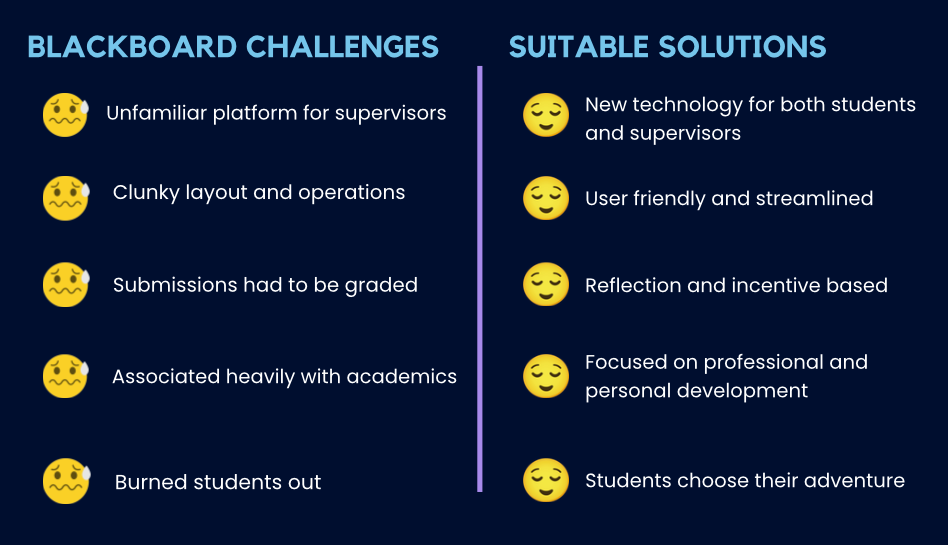
Staff members were burdened by the manual processes of tracking student participation through Blackboard, and lacked efficiency when verifying that students were actually gaining specific skills throughout their shifts. Supervisors were experiencing frustration with Blackboard's clunky layout, having to grade submissions of modules, and ultimately believed it focused too heavily on academics, which resulted in student burnout. This absence of a centralized, easy-to-navigate system made it nearly impossible to bring awareness to the developmental experiences the thousands of student employees across the university were gaining.
Work+ directors were able to conclude that employed students were often not resonating with the effort that they were putting into their jobs (working in a dining hall, as a Work+ intern, and more), and focused primarily on administrative tasks rather than professional growth. Students often struggled with placing professional value on their campus jobs, viewing employment as a “wallet-filling” pastime rather than a pre-professional experience. Without a mechanism to accurately document their progress, valuable learning moments were lost, and students lacked a tangible way to showcase their acquired competencies, such as leadership, communication, collaboration, and time management skills, to prospective employers.

Eran Peterson, Associate Director of Work+
Key Insights and Takeaways
The partnership with Suitable has led to a significant increase in student engagement and institutional efficiency, with hundreds of students successfully participating in the Work+ initiative. The university has moved from manual tracking to a real-time dashboard that allows administrators to monitor the professional growth of their workforce at a glance. This shift has not only reduced administrative burdens, but has also allowed for more meaningful, data-focused interactions between student employees and their supervisors. Measurable success is also evident in the students’ ability to articulate their professional value. Participants are now equipped with verified digital credentials that they can use during job interviews and on professional networking sites such as LinkedIn. By strengthening the use of badges in the employment experience, UConn has successfully transformed student life roles into high-impact learning opportunities, with plans to extend this impact across the entire campus community.